

Vaccination saves lives, but millions of people are still missing out
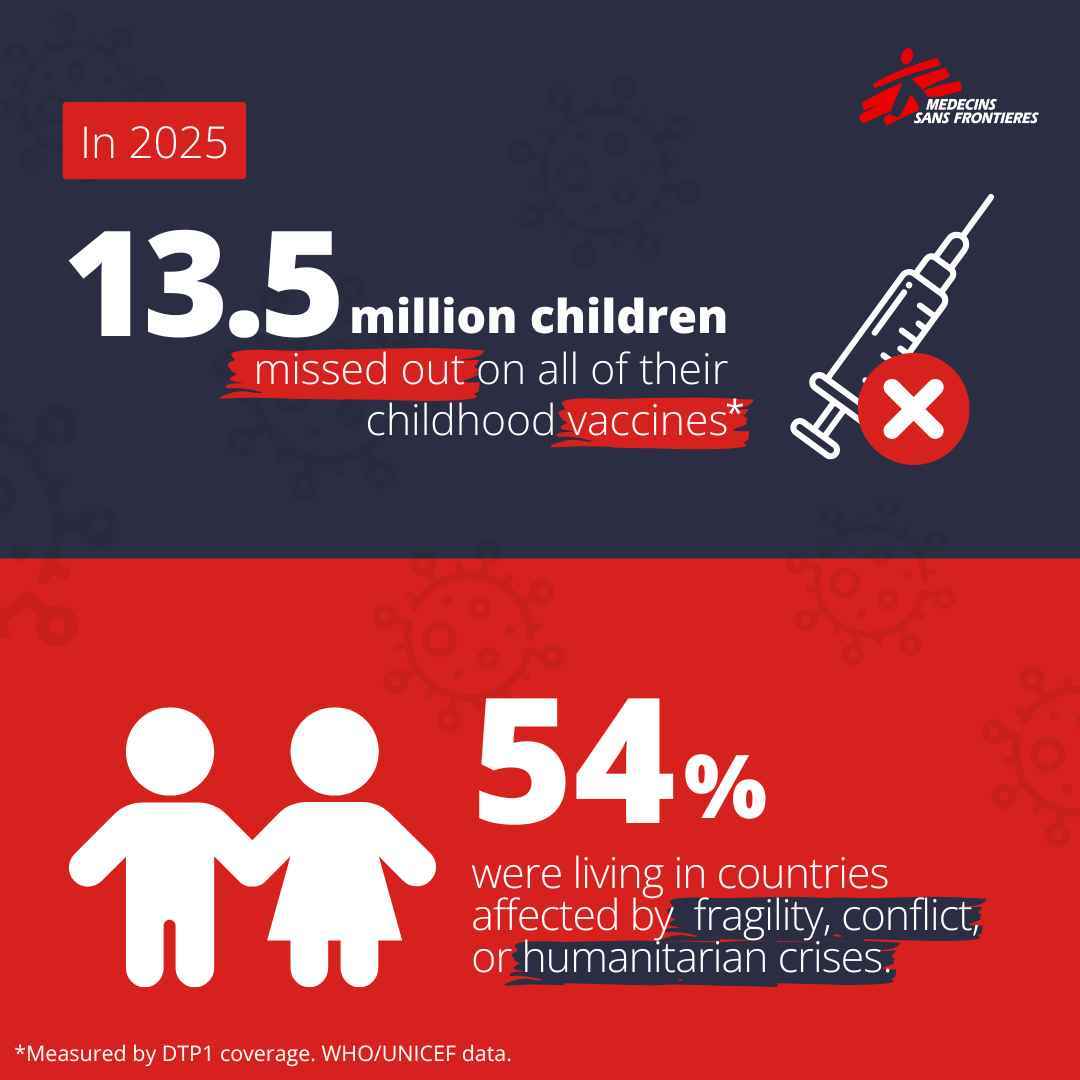
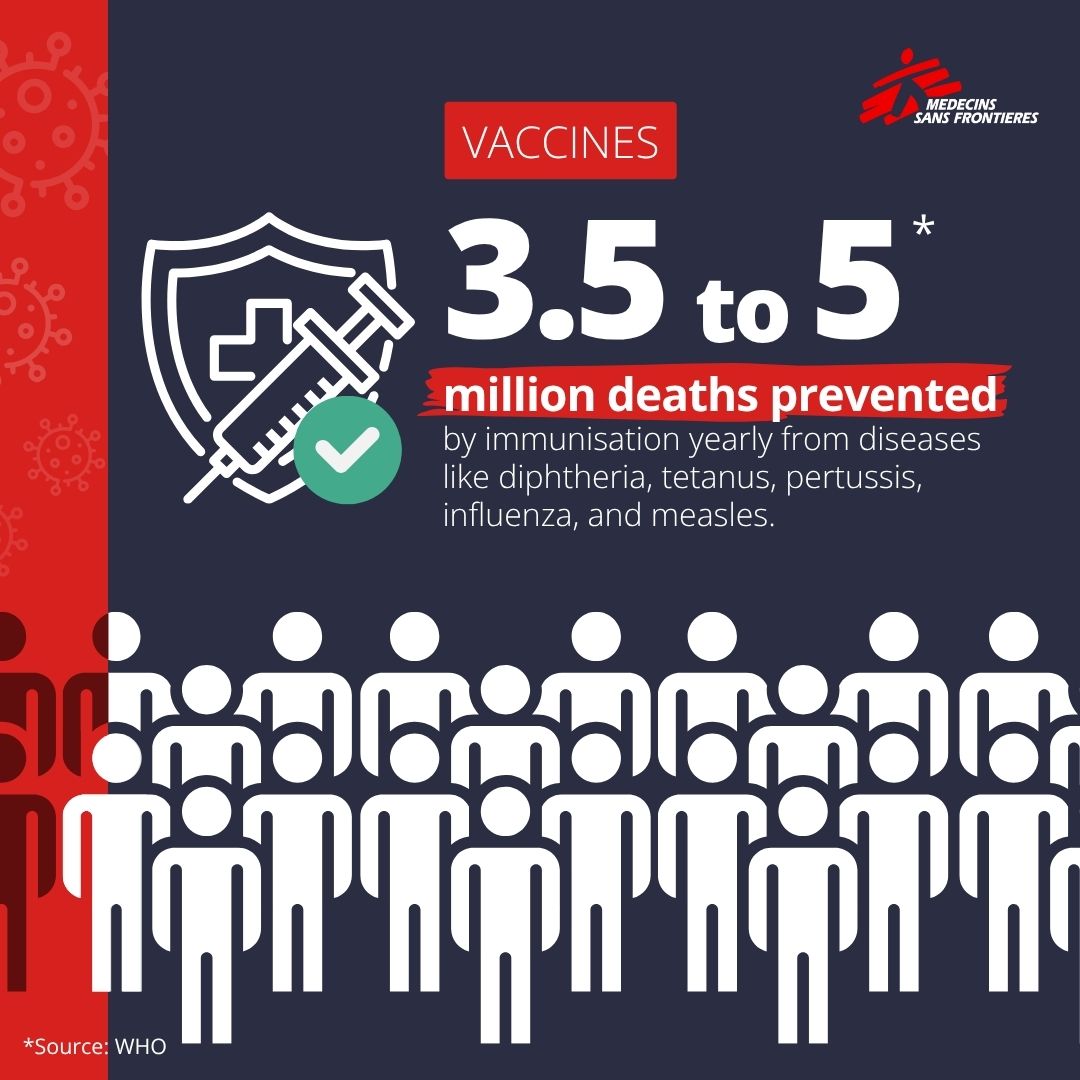
Vaccines are one of the most effective public health interventions available, preventing 3.5 to 5 million deaths every year from diseases like diphtheria, tetanus, pertussis (whooping cough), influenza, and measles. However, 13.5 million children around the world have never received a single vaccination, leaving them vulnerable to vaccine-preventable disease and death, and highlighting the critical need for effective vaccination campaigns. This, when lifesaving medical products like vaccines don't reach all who need them, is a vaccine access gap.
Our work: Bridging vaccination access gaps
We advocate for governments, warring parties, donors, and global health organisations to remove logistical, political, administrative, and financial blockages and ensure that vaccines are consistently available for rapid delivery.
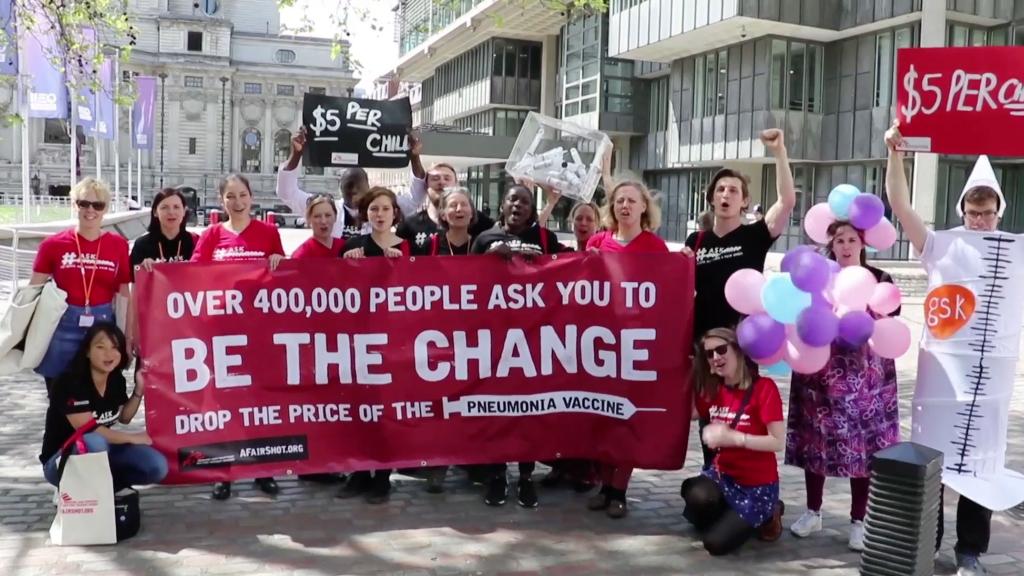
We also closely follows the development of new vaccines to anticipate and address any barriers that could limit access for people in low-resource, crisis-affected, or neglected settings. This includes analysing issues such as affordability, supply availability, registration, procurement conditions, cold-chain requirements, and suitability for use in humanitarian contexts. Based on this analysis, we call on pharmaceutical corporations, donors, governments, and other immunisation stakeholders to ensure that vaccines are developed, priced, supplied, and delivered in ways that respond to needs of people living in some of the hardest to reach places.
What are the vaccination access gaps?
The majority of unvaccinated children live in countries affected by conflict, fragility, or humanitarian crises. In these settings, vaccine access can be delayed or limited for a number of reasons. From vaccine delivery route closures to restricted access to remote areas due to conflicts and security challenges; from administrative delays limiting the supply of and access to doses to lengthy and sometimes intractable negotiations for response; and from financial constraints in-country to widening funding gaps from international donors, disease surveillance systems and vaccination programmes are faltering.
The consequences are dire: when communities are chronically or deliberately underserved by vaccination activities, the result is dangerously low vaccination coverage that leaves millions of children vulnerable to recurring, deadly outbreaks of vaccine-preventable diseases. Our work supports improving vaccine coverage by getting vaccines to people living in some of the world’s most precarious locations.
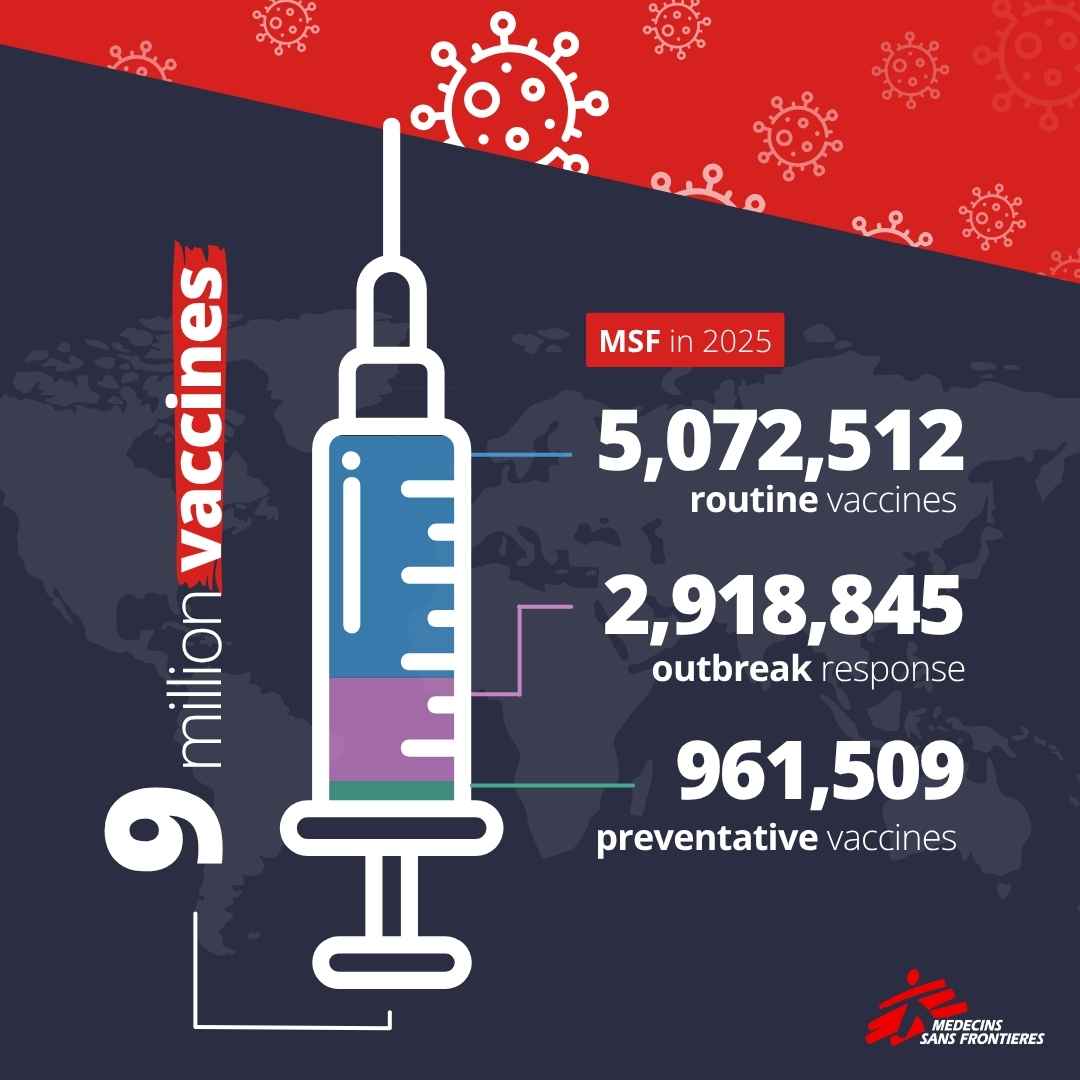
MSF vaccinates many millions of people every year. In 2025, MSF teams administered more than 5 million routine vaccinations, over 2 million measles vaccines in response to an outbreak, and 690,763 doses of cholera vaccine in response to an outbreak.
Read more about MSF's work on vaccination here.
Vaccinating in hard-to-reach places: the case of South Sudan
“Every child we reach with a vaccine is a child protected from diseases that are now largely controllable,” says Hussein Philemon Mahimbo, MSF staff in charge of a measles vaccination campaign in Tonj South County, Warrap State. “But in South Sudan, access is still dictated by conflict and displacement. When vaccination is interrupted, outbreaks are not a risk — they are a certainty. We are racing against time to close immunity gaps before more lives are lost.”
In early 2026, MSF scaled up vaccination efforts across multiple regions in South Sudan, reaching nearly 250,000 people through emergency and routine immunisation activities. Campaigns targeted cholera, measles, polio, and other diseases in highly affected counties, including displacement sites and hard‑to‑reach communities, helping to contain outbreaks and close critical immunity gaps.
Despite these efforts, sustained vaccination remains a major challenge due to access constraints, fragile health systems, and uneven coverage. Without safe, uninterrupted humanitarian access and long‑term investment in immunisation, preventable diseases will continue to threaten children’s lives. Timely and consistent vaccination is essential to prevent further avoidable suffering and deaths.
Three things to know about vaccines
How MSF is responding to gaps in immunisation
Key publication
More topics
Latest News


