
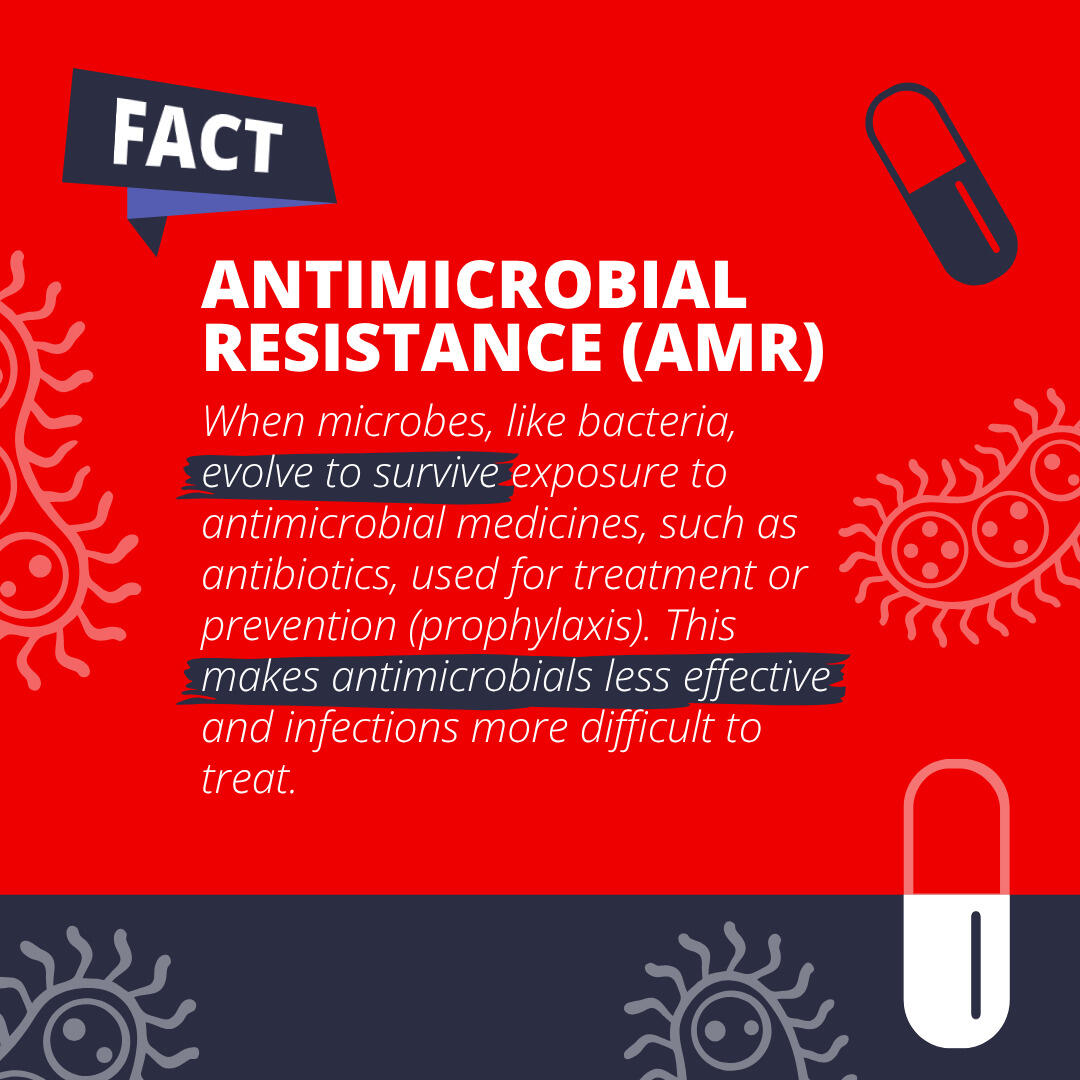
FACT: Antimicrobial resistance (AMR): when microbes, like bacteria, evolve to survive exposure to antimicrobial medicines, such as antibiotics, used for treatment or prevention (prophylaxis). This makes antimicrobials less effective and infections more difficult to treat. MSF
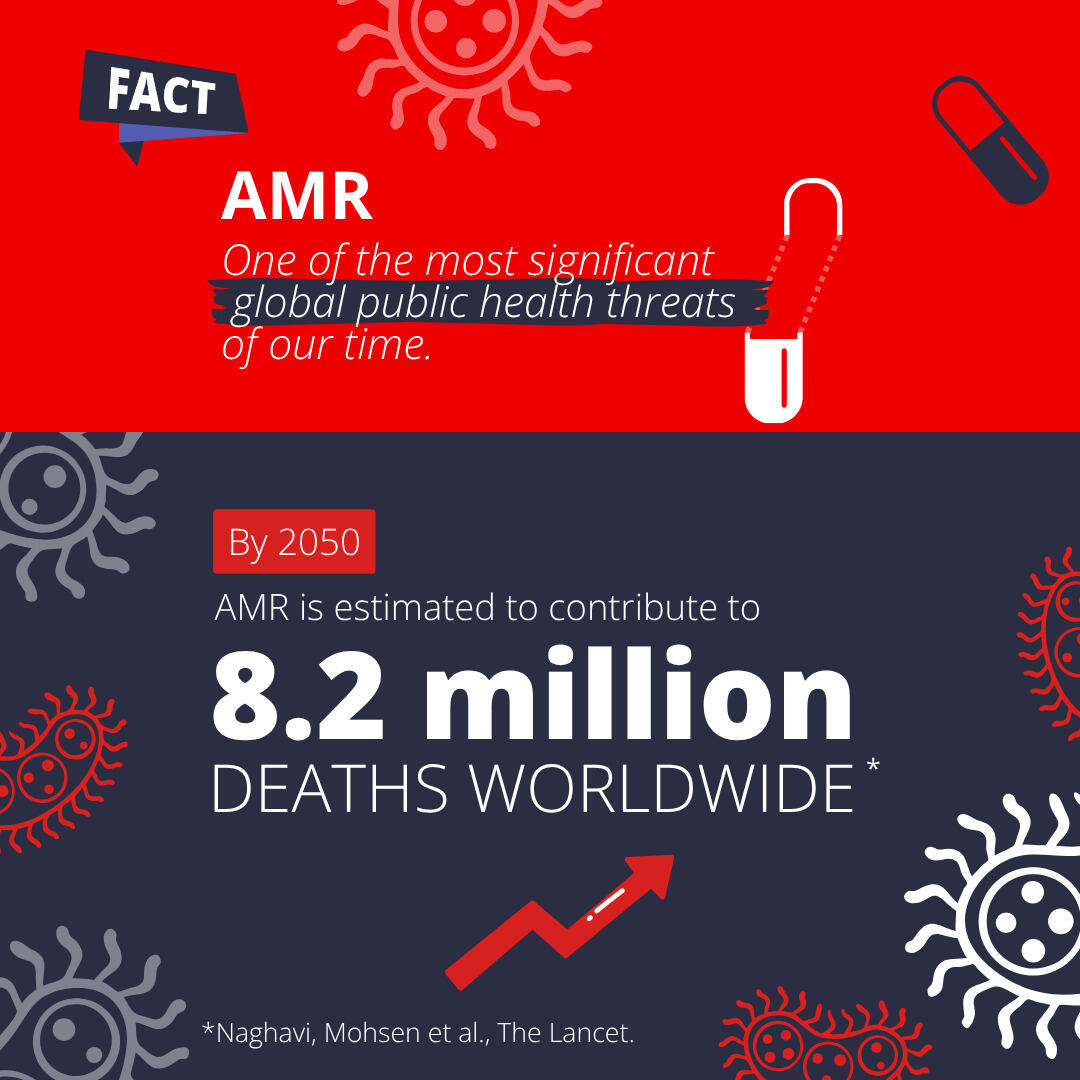
AMR: One of the most significant global public health threats of our time. By 2050, AMR is estimated to contribute to 8.2 million deaths worldwide.. MSF
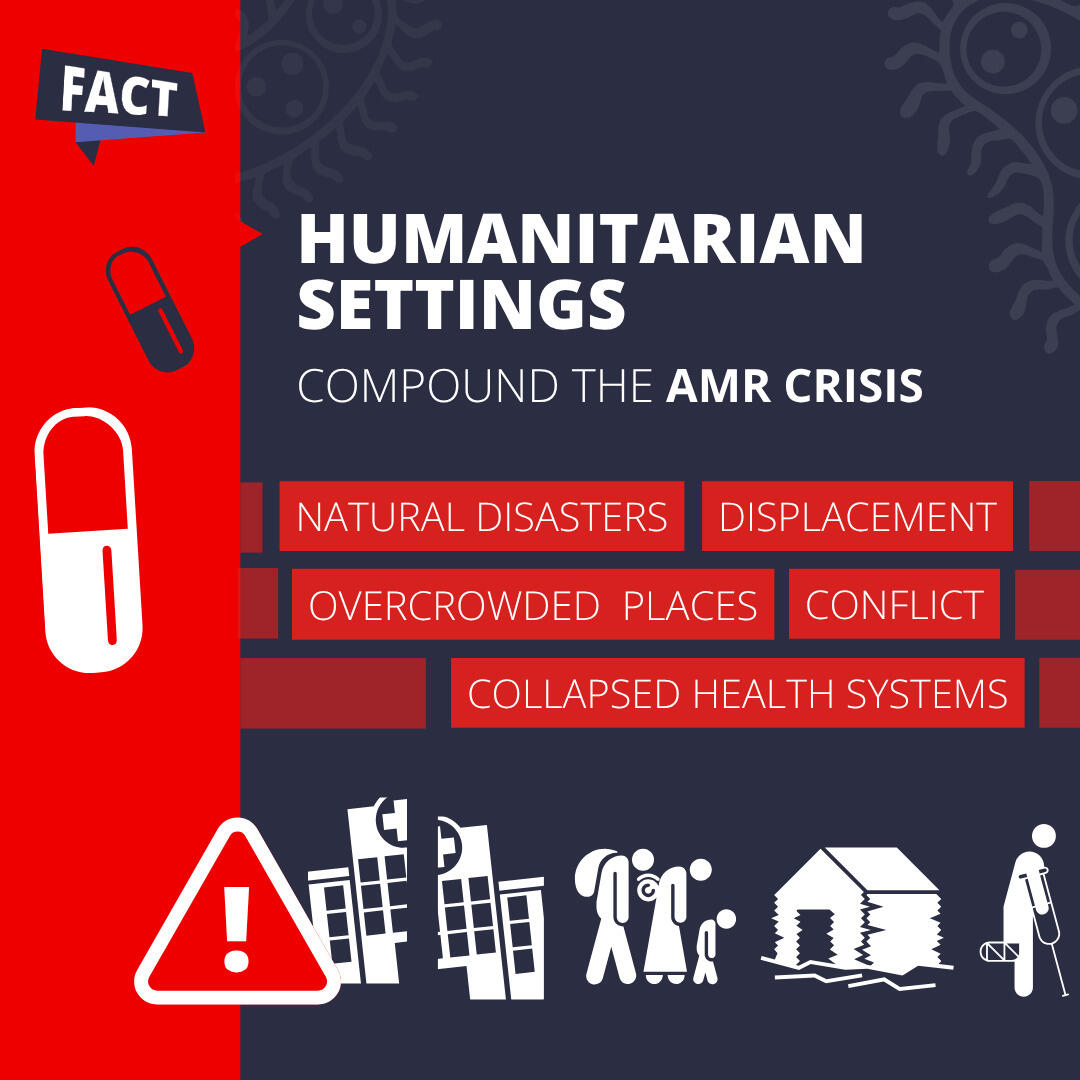
FACT: Humanitarian settings compound the AMR crisis. Natural disasters. Displacement. Overcrowded places. Conflict. Collapsed health systems. MSF
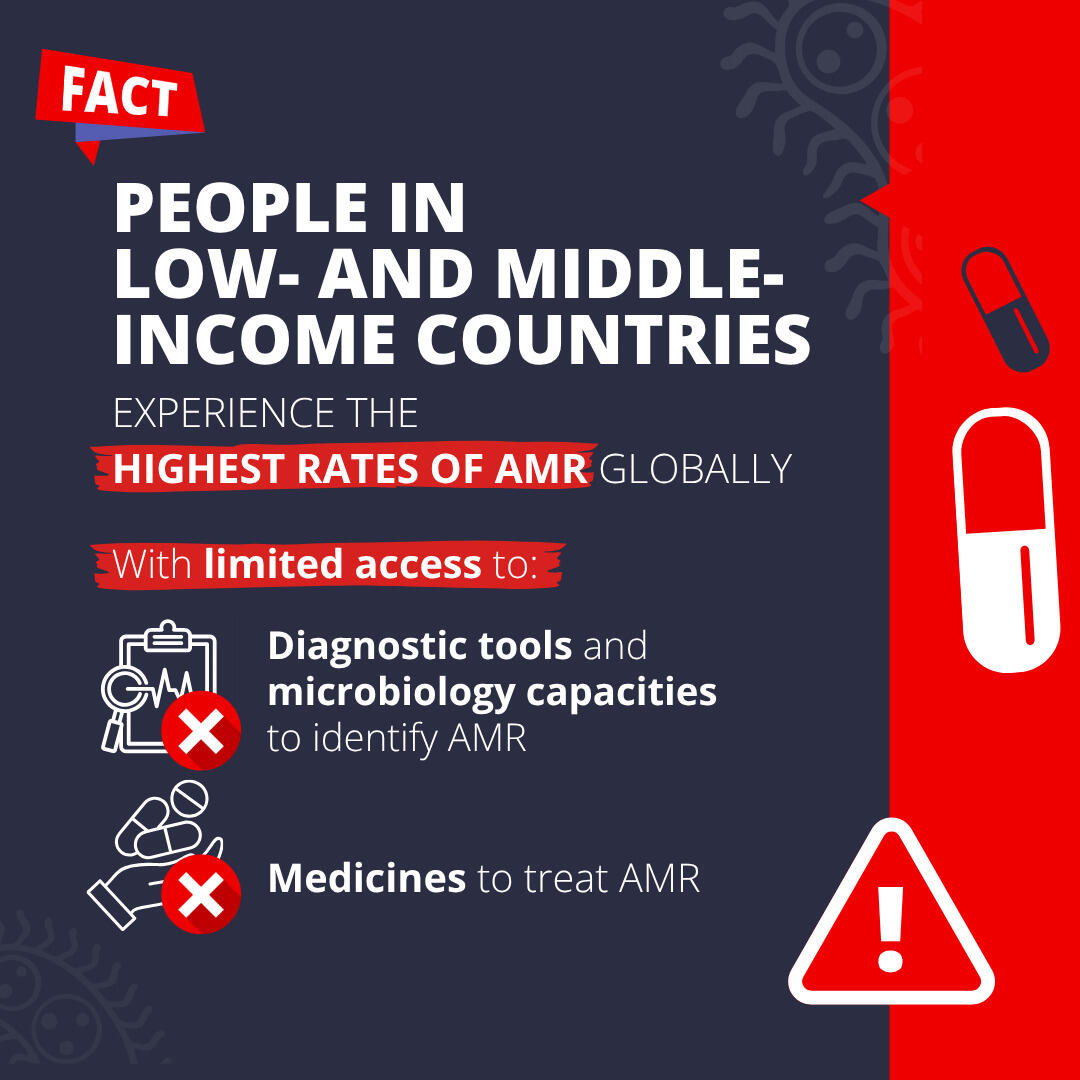
FACT: People in low- and middle-income countries experience the highest rates of AMR globally, with limited access to diagnostic tools and microbiology capacities to identify AMR and medicines to treat AMR. MSF
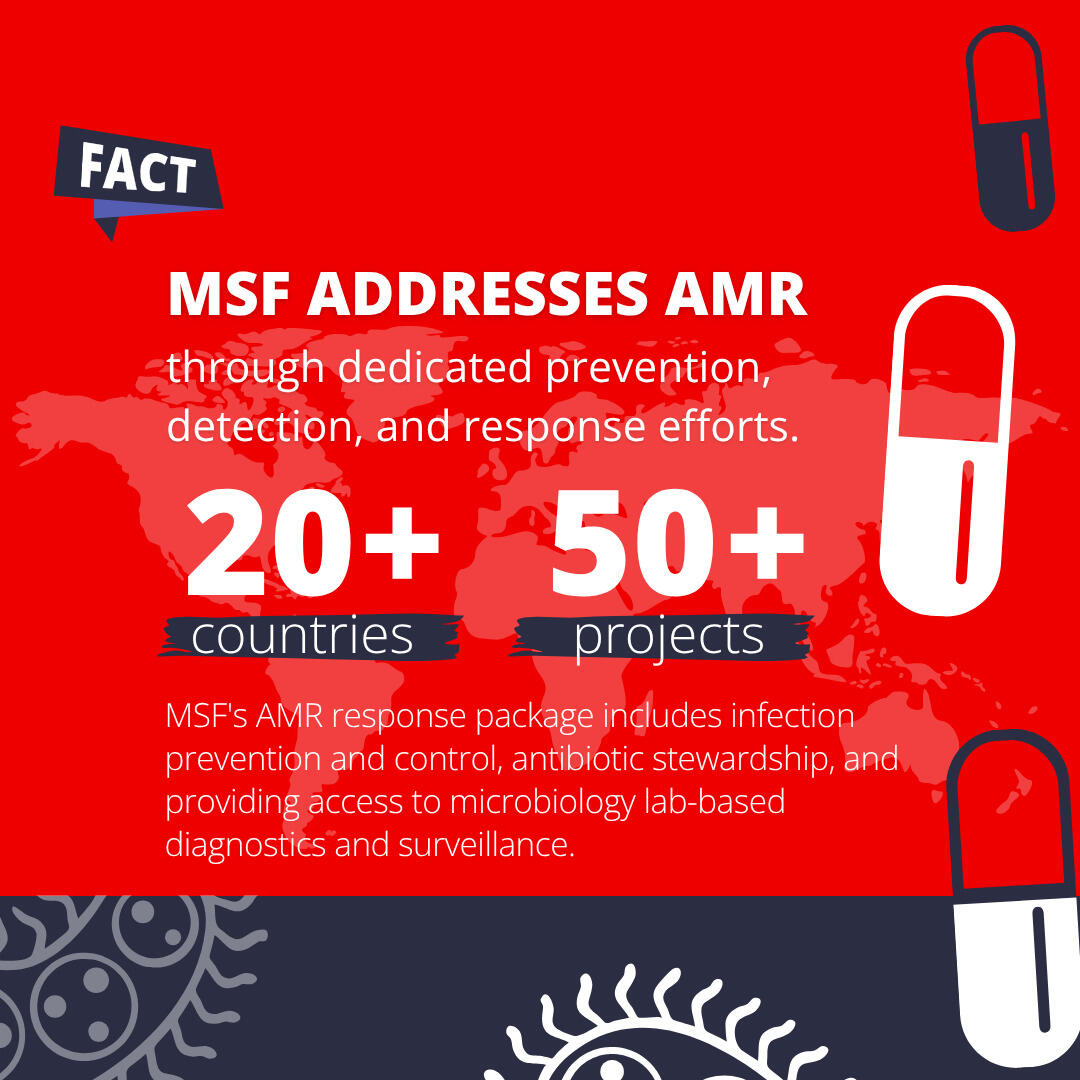
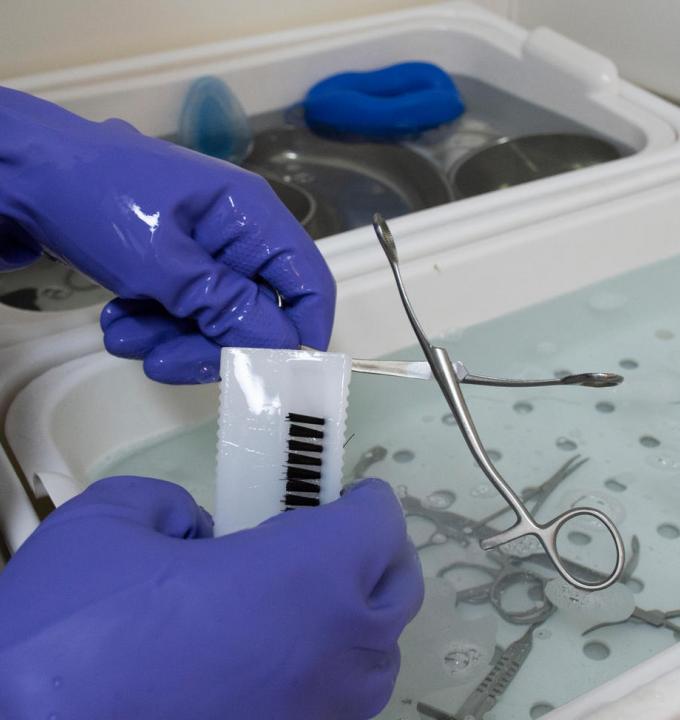
MSF address AMR through dedicated prevention, detection, and response efforts: +20 countries, +50 projects. MSF's AMR response package includes infection prevention and control, antibiotic stewardship, and providing access to microbiology lab-based diagnostics and surveillance. MSF
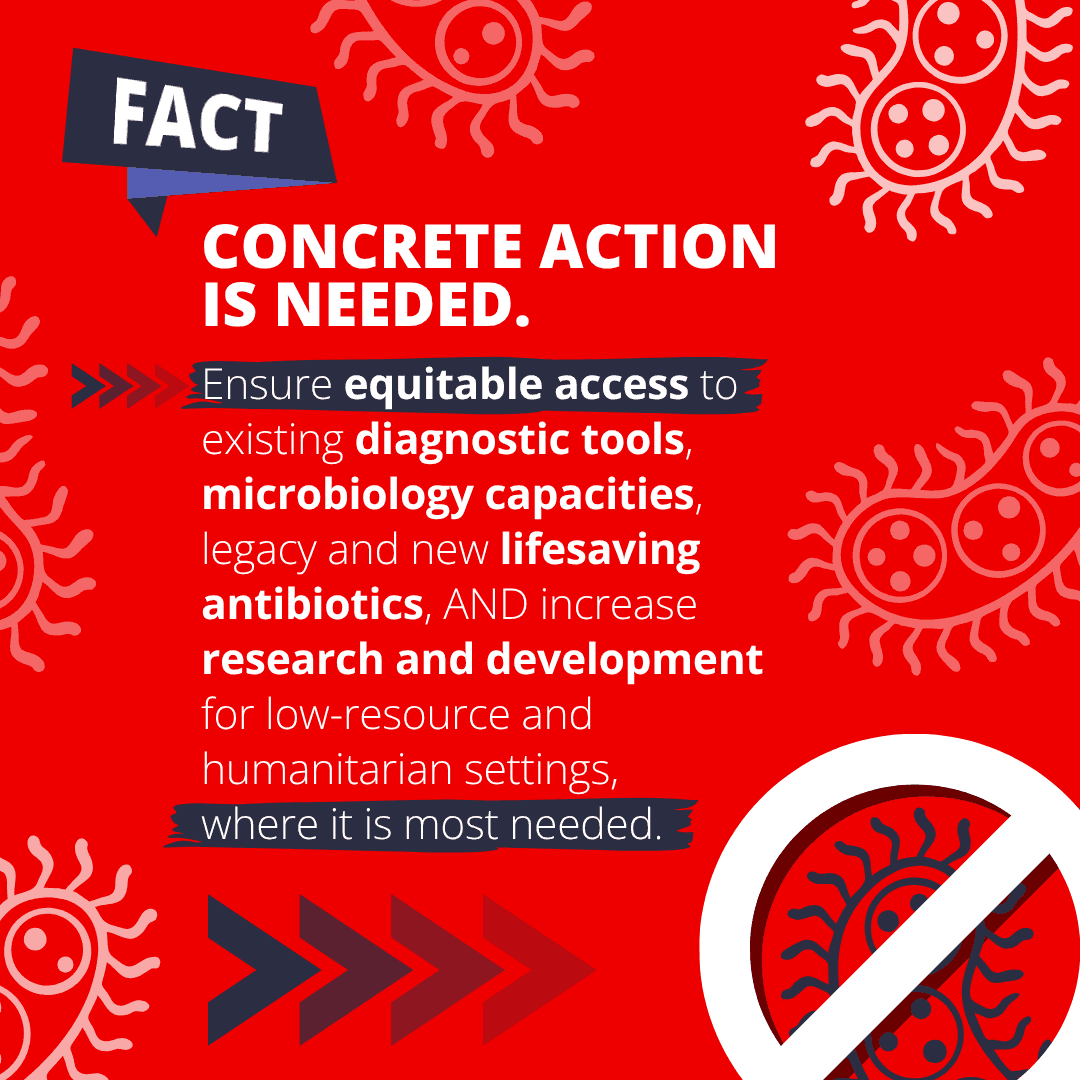
CONCRETE ACTION IS NEEDED. Ensure equitable access to existing diagnostic tools, microbiology capacities, legacy and new lifesaving antibiotics, AND increase research and development for low-resource and humanitarian settings, where it is most needed. MSF