
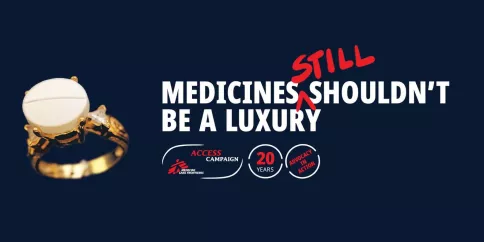
The access to medicines crisis
Patents can have a dramatic impact on access to medicines when they are used to prevent competition. A drug company that holds patents on a medicine has the right to prevent others from manufacturing it and therefore can charge an artificially high price. When a company is selling CD-ROMs or toy dolls for example, this might be of no great significance. But when life-saving treatments for diseases such as HIV/AIDS or cancer become unaffordable to those that need them, the consequences can be - and are - devastating. In developing countries, where people pay for drugs out of their own pockets and very seldom have health insurance, the high price of medicines becomes a question of life and death.
The most effective answer: generic competition
The most effective and sustainable way to bring down the price of a drug is through competition between different manufacturers. But if a medicine is under patent and the patent owner is not willing to allow competition, the impact on a drug’s price is striking.
The drugs to treat HIV/AIDS provide a perfect illustration of how patents allow manufacturers to keep the price of medicines high, and how competition brings those prices down. When MSF began providing antiretroviral treatment to people living with HIV/AIDS in 2000, a year’s treatment course cost more than US$ 10,000 per person. At this time, antiretrovirals (ARVs) were only available from the drug companies that held the patents. With the onset of competition among multiple producers, prices began to plummet in the years that followed. The most commonly used triple-drug AIDS treatment in the developing world now costs less than $70 per year.
GRAPH: Generic competition as a catalyst for price reductions. The fall in the price of the first-line combination of stavudine (d4T), lamivudine (3TC), and nevirapine (NVP), since 2000.
This 99% price reduction was possible because the medicines were not under patent in several countries with pharmaceutical production capacity – such as Brazil, India and Thailand – allowing local producers in these countries to legally manufacture generic versions of the medicines patented in developed countries, thereby driving prices down. These affordable generics could also be exported to other developing countries where the medicine was not under patent.
Why the price crisis is set to return
Generic competition may have been instrumental in bringing down the price of the first generation of ARVs and other drugs, but the situation today is different and the progress achieved is once again under threat.
Key countries where generics are produced now grant medicine patents, in order to comply with their international obligations as members of the World Trade Organization. Newer drugs are already patented in these countries, including (but by no means limited to) new ARVs, meaning that production of affordable generic medicines is now restricted.
If generic competition is unable to come to the rescue, newer life-saving medicines will quite simply be priced out of reach of those in need. For HIV/AIDS, this means that countries with successful AIDS treatment programmes like Brazil or Thailand face a financial time bomb: patients on treatment gradually need to shift to newer, more expensive drugs as, inevitably, their resistance to older therapies increases, they develop harmful side effects, or as better drugs are developed.
At the same time, the global pattern of diseases is changing. Chronic or non-communicable diseases, such as cancer, diabetes or cardiovascular disease are rapidly increasing in the developing world – and a strategy to get affordable medicines to treat these conditions needs to be put in place now.
But for all newer medicines, now that more and more countries apply tighter patent regimes, competition with affordable generics will be much more limited.